
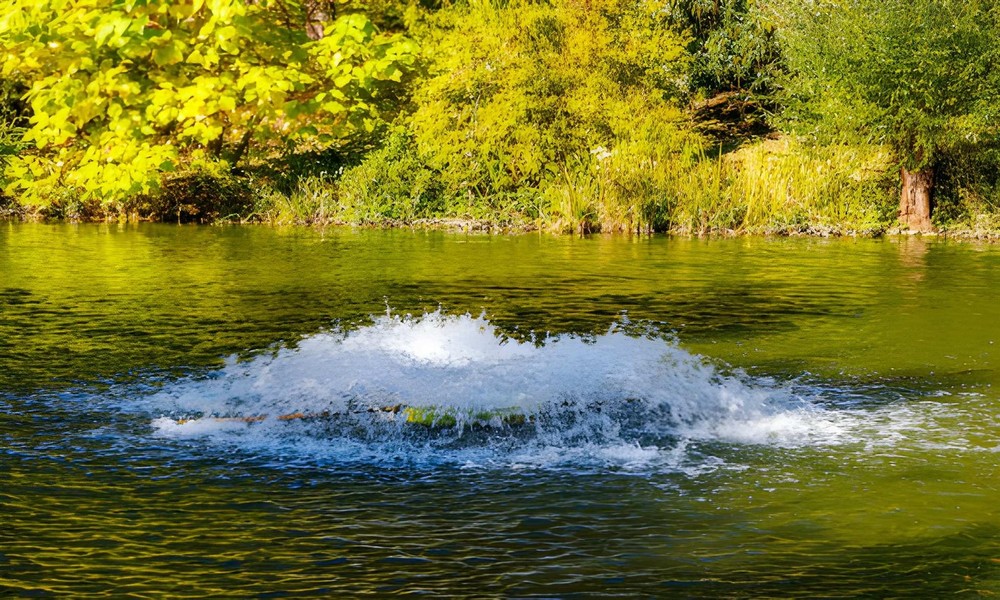

Seeing your koi gasping for air on a scorching afternoon is terrifying. Fish and beneficial bacteria desperately need oxygen to prevent murky water, making a solid aeration system essential. However, shopping for one means facing confusing flow rates and depth charts. Let us understand how do you choose the right size without turning your peaceful backyard oasis into a raging, turbulent jacuzzi?
Sizing It Up
Let us break this down simply, without all the mind-numbing corporate jargon. The absolute baseline rule of thumb most professionals rely on is purely volume-based: you need an air pump that delivers about 20 Liters per Minute (LPM) of airflow for every 1,000 gallons of pond water. So, let us do some quick math.
If you are running a 2,000-gallon setup, you will want to hunt for a pump pushing at least 40 LPM. For anyone demanding top-tier reliability, the team over at That Pond Guy supplies some truly incredible, heavy-duty gear, specifically the Charles Austen ET and ETA series. What is particularly brilliant about their ETA models is that they come built as a pond airpump with alarmsystem.
If your line snaps or the pressure suddenly drops, a little built-in buzzer or warning light alerts you instantly before your fish end up stranded in stagnant, suffocating water. Honestly, that kind of failsafe peace of mind is worth every single penny when you are looking after expensive fish.
Why Depth Changes Everything
But wait. Hold on a second. Gallons are not the whole story here. You absolutely have to factor in your pond’s depth because water is incredibly heavy, and it fights back.
Think about these critical factors before hitting that buy button:
- The Depth Factor: The deeper your air stones or diffusers sit, the harder your pump has to push against water pressure (known as backpressure). A pump pushing 60 LPM at the surface might only give you 30 LPM at six feet deep! Always check the performance curve chart.
- Fish Stocking Density: Got a massive load of big, hungry koi? They consume way more oxygen than a few tiny goldfish. If your pond is heavily stocked, scale up your pump size by a tier.
- Pond Shape: Long, irregular, or kidney-shaped ponds often suffer from nasty “dead zones” where water completely stagnates. Instead of one massive air stone, it is usually much smarter to split the line from a slightly larger pump to feed two or three diffusers scattered around the floor.
Don’t Overthink It
Look, don’t over-analyse this to the point of total paralysis, but definitely avoid under-sizing. Buying a pump that is a bit too big is rarely an issue because you can easily bleed off excess air using a simple chrome manifold valve.
Running a pump that is too small, though? It will run hot, wear out the rubber diaphragms way too fast, and leave your pond suffocating. Get the depth right, check your gallon count, pick up a reliable unit from That Pond Guy, and your finned buddies will thank you.

Tracy Gonden is a business and finance writer who focuses on profitability strategies, business development, and financial planning. She shares practical approaches that support long-term business growth and operational efficiency.