
The Distinction That the Term Actually Draws
What is commercial cleaning services is a question with a more specific answer than the phrase might suggest. Commercial cleaning refers to professional cleaning carried out in business premises – offices, retail outlets, warehouses, factories, hospitals, and schools – as distinct from residential cleaning carried out in private homes. The distinction matters because commercial environments have different occupancy densities, different regulatory obligations, different surface types, and different contamination profiles than domestic spaces. A commercial cleaning company is equipped, staffed, and insured to operate at the scale and to the standards that business premises require, which differs substantially from the residential cleaning model.
The Service Categories That Commercial Cleaning Covers
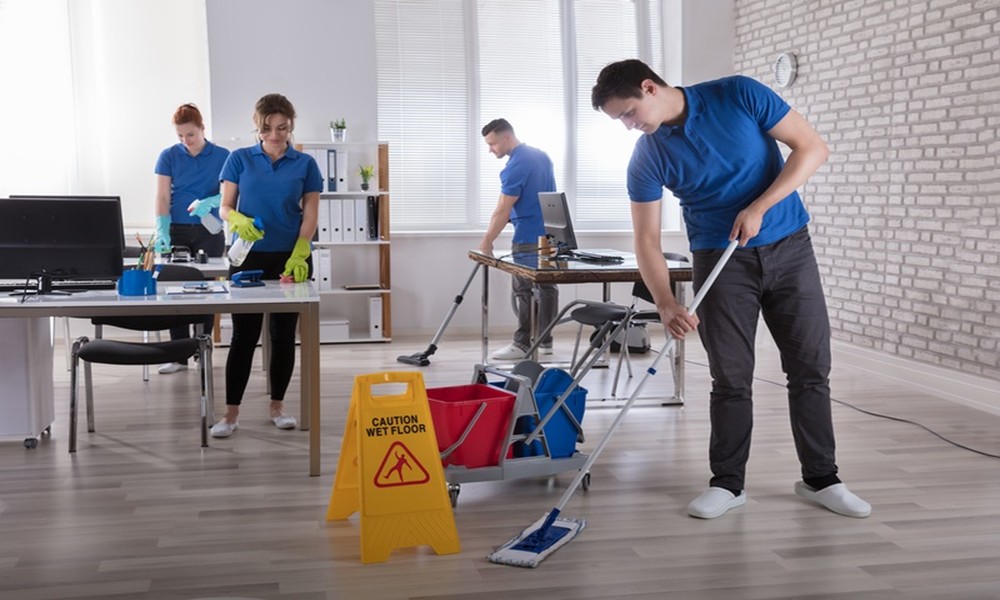
Commercial cleaning services span several distinct service lines, each suited to a different business environment and requirement. Office cleaning covers daily or periodic cleaning of workstations, common areas, meeting rooms, pantries, and restrooms in commercial office buildings. Retail cleaning addresses high-traffic shop floors, display areas, fitting rooms, and customer restrooms where appearance directly affects the customer experience. Industrial cleaning handles factories, warehouses, and production facilities where contamination types include grease, chemical residues, metal swarf, and process waste that consumer cleaning products are not designed to address.
Specialist cleaning services sit within commercial cleaning but require additional training, equipment, or certification: medical facility cleaning with infection control protocols, food processing facility cleaning with hygiene standards aligned to food safety regulations, and post-construction cleaning that removes construction dust and debris before a new premises is occupied.
Daily Cleaning Versus Periodic Deep Cleaning
Commercial cleaning services for Singapore businesses are structured as either recurring scheduled services or periodic deep cleaning engagements. Daily or regular scheduled cleaning maintains baseline hygiene across the premises, covering vacuuming, mopping, surface wiping, restroom cleaning, and bin emptying on each visit. Periodic deep cleaning goes into the areas that daily cleaning does not reach: behind and beneath furniture, inside ventilation grilles, high-level ledges and light fittings, carpet deep extraction, and upholstery cleaning. Most commercial premises benefit from combining a regular cleaning schedule with quarterly or semi-annual deep cleaning to maintain standards across the full surface area of the building.
“Singapore’s workplaces and public spaces are clean because we have made cleanliness a discipline, not a habit of convenience,” Lee Kuan Yew observed in a statement that captures the deliberate approach behind Singapore’s exceptional public hygiene standards.
What Commercial Cleaning Includes for Specific Premises Types
What commercial cleaning services include varies by premises type. For offices, the scope typically covers:
- Floor cleaning by vacuuming for carpets and mopping for hard floors
- Workstation surface wiping and telephone and keyboard disinfection
- Meeting room cleaning after each use
- Pantry and kitchen area cleaning including appliance exterior surfaces
- Restroom cleaning and consumable restocking
- Glass partition and window cleaning on a defined frequency
For retail premises, scope shifts to include customer-facing display areas, fitting room cleaning after each use, and floor maintenance that keeps high-traffic surfaces presentable throughout trading hours. Industrial facilities require specialised degreasing, floor scrubbing with industrial equipment, and handling of waste streams that regular cleaning does not address.
The Regulatory Context That Governs Commercial Cleaning in Singapore
Commercial cleaning companies in Singapore are required under the Environmental Public Health Act to maintain licensed cleaning premises and to ensure that workers are properly trained. The National Environment Agency’s Environmental Sanitation regime, introduced in 2021, sets mandatory environmental sanitation standards for high-risk premises including hawker centres, schools, and healthcare facilities, specifying minimum cleaning frequencies and auditable hygiene outcomes. Businesses in these categories must engage cleaning service providers who can demonstrate compliance with NEA standards.
The Workforce Skills Qualifications framework administered by SkillsFuture Singapore includes WSQ cleaning competency units that define the knowledge and practical skills requirements for professional cleaners, and licensed cleaning companies typically require their staff to hold these qualifications.
What to Look For When Engaging a Commercial Cleaning Company
Commercial cleaning services providers should be evaluated on their NEA licensing status, the training and WSQ qualification level of their cleaning staff, their insurance coverage including public liability and workmen’s compensation, the cleaning chemicals and equipment they use, and their contract terms covering scope, frequency, and performance remedies. A detailed written quotation that specifies exactly which tasks are included at what frequency is the baseline for any commercial cleaning engagement.
References from existing clients with similar premises types provide the most reliable indicator of service quality in practice. What is commercial cleaning services ultimately comes down to how reliably a provider delivers a defined standard, visit after visit, across the full scope of what a business premises requires.

Geneva Nesmith is a finance and business writer specializing in growth strategies, market insights, and financial planning. She focuses on practical approaches that support sustainable business success.