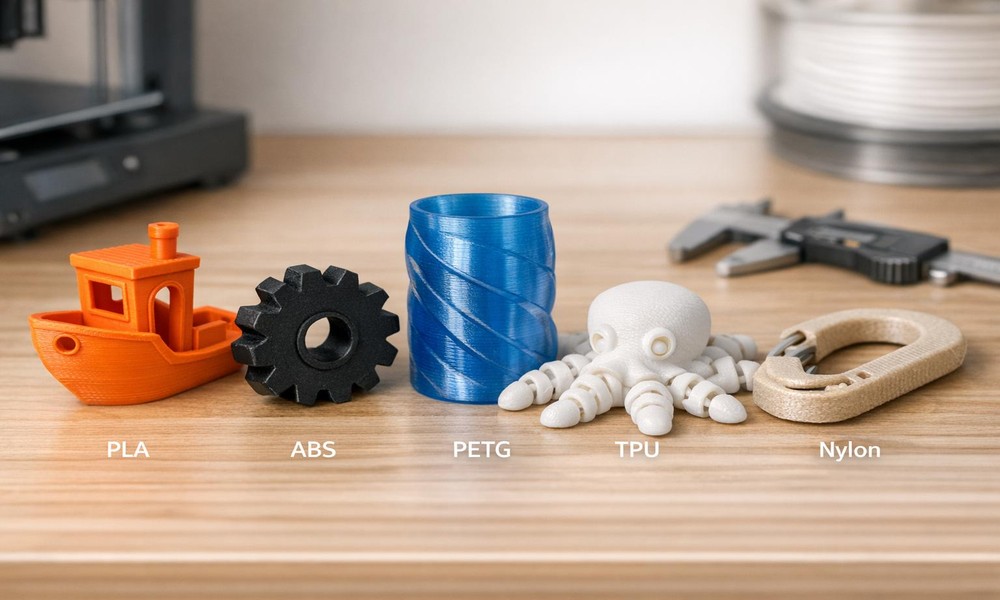

One of the characteristics of quality PETG filament is that it feels consistent in your hands on the spool. Not brittle or rough to the touch. Rather, it is smooth and does not need to be fiddled with a lot in the printer when it is set up properly. Many of these users will immediately be able to see that higher quality PETG filament will not have as many weak points as the cheaper grades.
This is a compromise between easy printing PLA and tougher engineering plastics. It provides a balance which is appropriate for both beginners and advanced users. If the spool is made well, the line will remain even, thus preventing the potential for print problems later on. One of the best ways to assess the quality of a PETG filament in a good batch is the way it feeds into the printer’s extruder.
When printing, it’s what it does.
PETG is a bit different to other common materials when it comes to printing. It has a slow melt rate and a strong adhesion to the print bed. This will minimize lifting at the edges and can compromise larger prints.
This is because, when using high-quality PETG filament, the flow is more stable, which allows layers to join cleanly. If the heat is too high, light stringing can be seen between parts, but is typically manageable with small changes. Users report minimal problems when the temperature range is programmed in, after that, it works fine.
Cooling also has a role to play. Excessive air movement can result in weaker layers, and insufficient air movement can have an impact on detail. A balanced set-up produces a more desirable surface finish and a superior part.
It is used daily in several places.
PETG is used for lots of common prints. Suitable for storage boxes, clips, machine covers and parts under pressure. It also works well on products that might be kept in warmer rooms or in the sunlight.
Parts that require a longer lifespan may be made with high-quality PETG filament. It is used by some hobby users for models that are used frequently because it retains shape and does not crack easily when subjected to light stress.
This is also a material for small workshop projects. Brackets, holders and fittings with PETG can be used repeatedly without breaking down too rapidly. This is a reliable choice for home use and light production.
Simple steps that make a difference
The key to better prints with PETG is often in making some minor changes. Cleanliness of the bed surface is a great help. A dust or oil contaminating the first layer can have an impact on the subsequent layers sticking. A clean bed will lead to more consistent prints.
Dry filament is also a factor. Over time PETG can absorb moisture from the air, causing a rough surface or small bubbles in the print. This can be minimised if the filament is packaged in a sealed container.
Temperature settings also are important. Any adjustment in temperature can make the difference between stringy and clean. Many users experiment in small increments to get a setting that is suitable for their printer.
The Importance of Material Selection
Even if the filament looks alike on the spool, it does not have the same characteristics. Its method of manufacture alters its printability and strength of the finished part. High-quality PETG filament allows for fewer print failures and improved consistency with over time.
Choices of material may save time and effort for users who print frequently. Fewer restarts and less waste of material; a stable filament. It also facilitates the acceptance of the final print in real projects.

Geneva Nesmith is a finance and business writer specializing in growth strategies, market insights, and financial planning. She focuses on practical approaches that support sustainable business success.